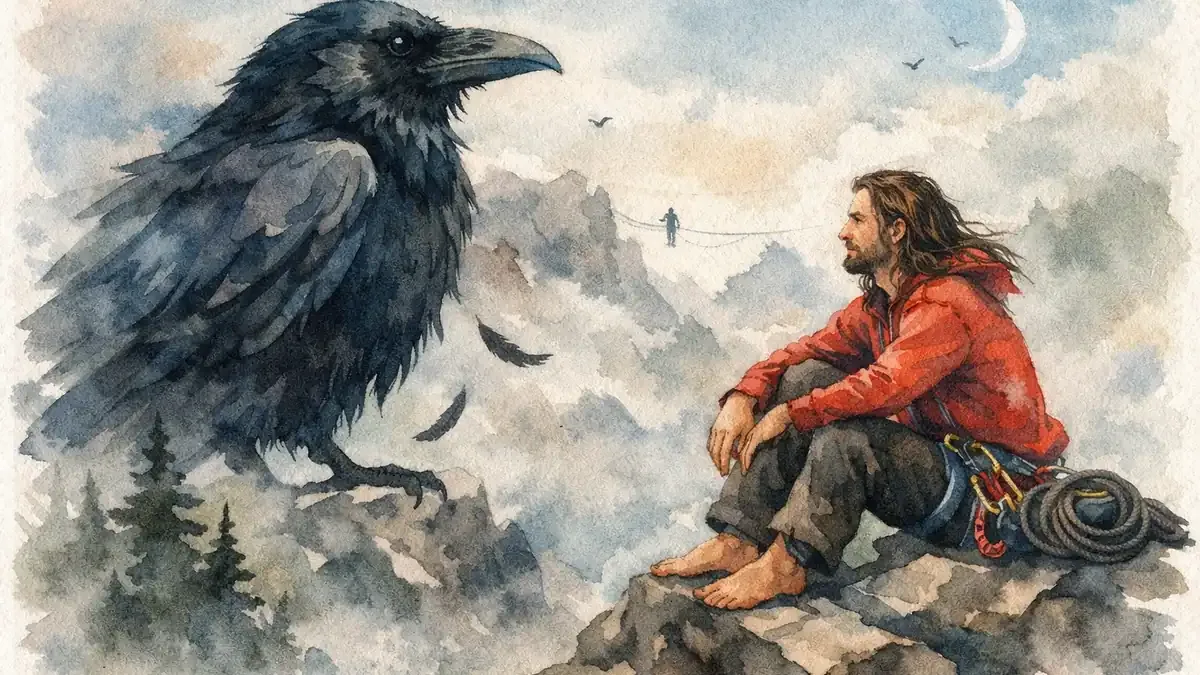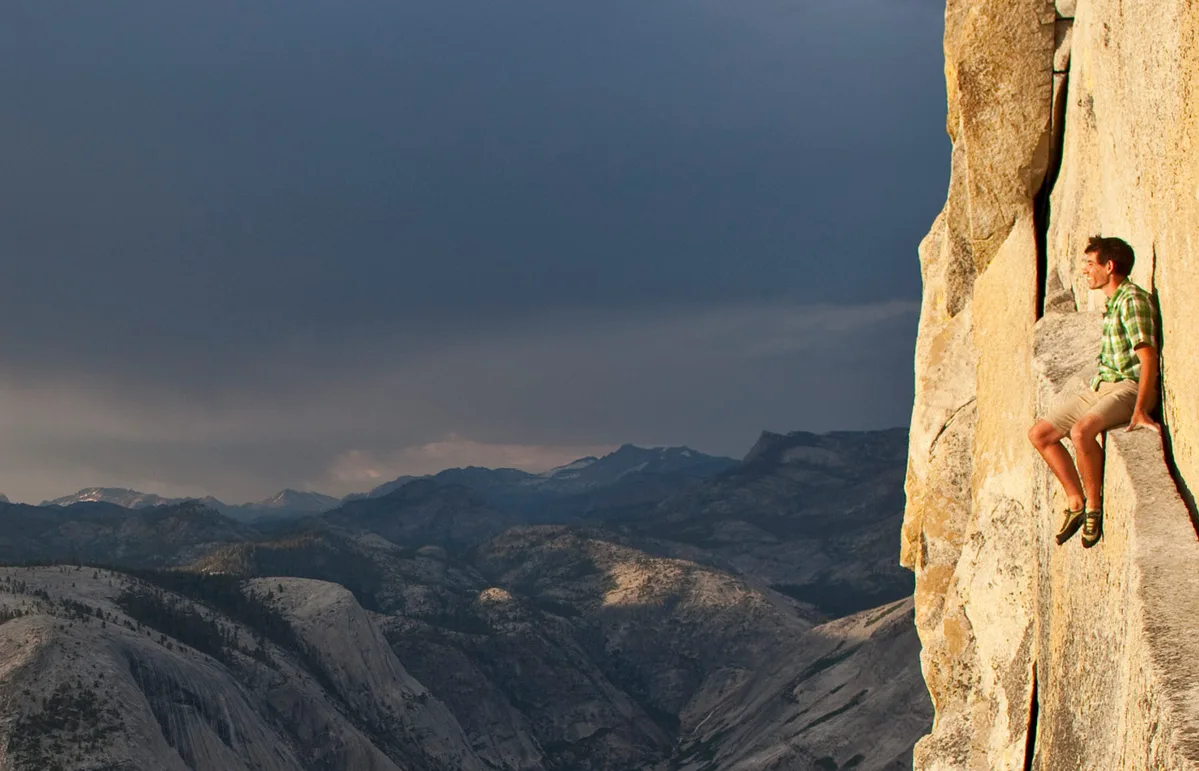
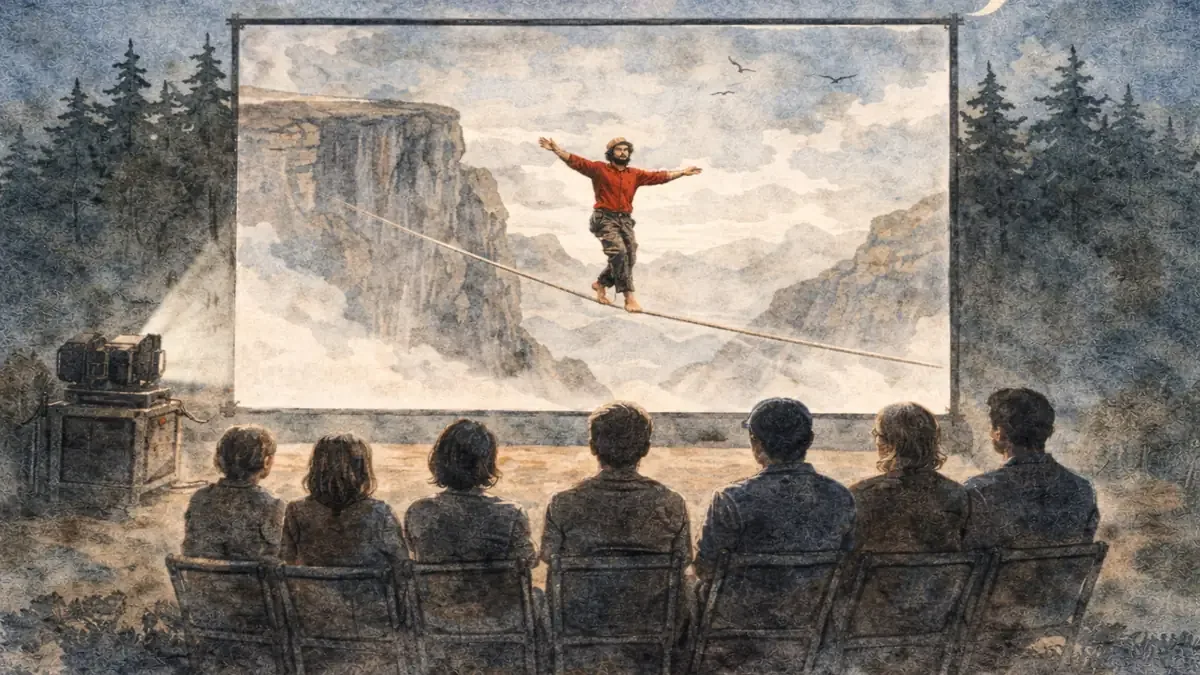
There is a criticism making its way around since The Dark Wizard premiered on HBO. It says nothing about the cinematography or the editing. It speaks to something more uncomfortable: whether Sender Films had any right to make it at all. The argument, in its most direct form, holds that Dean Potter's journals were his. That what he wrote in the solitude of those pages (his fears, his emotional debts, his complicated relationship with mental health, his resentment toward Honnold, his ego exposed without a camera rolling) belonged to no one else. That Peter Mortimer and Nick Rosen arrived with their microphones and their animations and built a series from material Dean never authorized anyone to share. And that beneath all that filmmaking, what really exists is a business operation.
It is an understandable criticism. And it is wrong.
Not in its facts (the journals are intimate, the commercial motivation does exist) but in the principle that supports it. That the private, by the mere fact of being private, deserves to remain private forever. That the intimacy of a significant person is the exclusive property of those who knew her. That the world, the community, history itself, hold no claim over what someone lived.
That principle, followed to its consequences, would have destroyed much of what we call culture today.
In 2017, the publishing house Gallimard released in Paris the Correspondance 1944-1959 between Albert Camus and the Spanish actress María Casarès: 865 love letters written over fifteen years, during which Camus remained married to another woman, took other lovers, won the Nobel Prize, and died in a car accident in January of 1960. The letters were not a manuscript prepared for print. They were exactly what the word suggests: private correspondence between two people in love who wrote to each other, sometimes several times a day, about desire, absence, jealousy, work, the fear of aging, tuberculosis, theater, and war.
The decision to publish them belonged to Catherine Camus, the writer's daughter. She hesitated at length. She openly acknowledged that these were deeply intimate documents. And yet, after acquiring the letters Casarès had kept for decades, she gathered the complete archive and placed it in the hands of an editor. Her reasoning, written in the prologue to the edition: the letters make the earth vaster, the space more luminous, the air lighter, simply because they existed.
That is not a sentimental justification. It is an argument about the value of the complete truth against the fragmented portrait that survives without it. Camus without his letters to Casarès is the Nobel laureate, the author of The Stranger, the committed intellectual. Camus with his letters is all of that, and also the man who contradicts himself, who loves with ferocity and selfishness, who writes his best lines not for posterity but for a woman waiting on the other side of a mailbox. He is more human, and therefore more true, and therefore more useful for whoever comes next trying to understand what it means to live with intensity and flaws simultaneously.
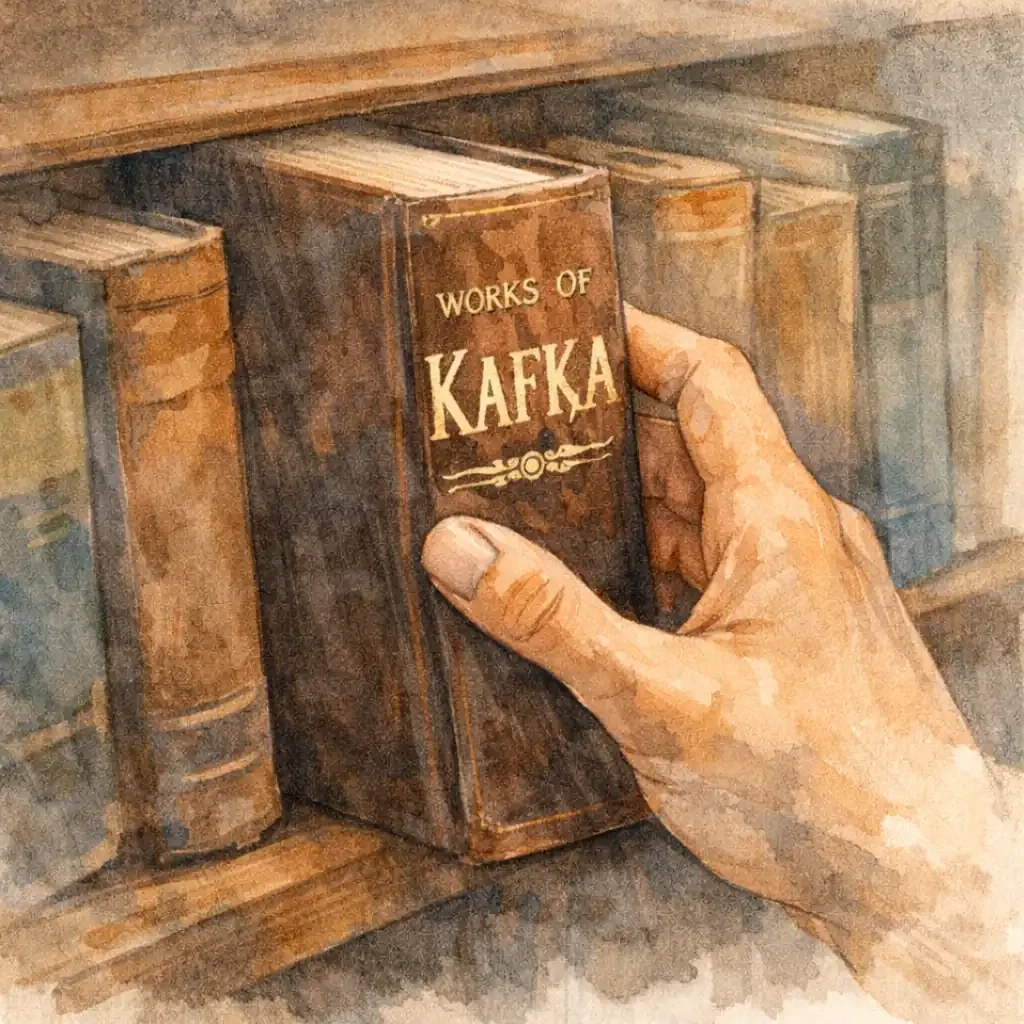
History offers many examples of this tension. Kafka asked his friend Max Brod to burn his unpublished manuscripts. Brod refused. He published The Trial, The Castle, Amerika. Had he obeyed, three of the foundational works of twentieth-century literature would not exist. No one, today, argues that Brod betrayed Kafka. Most conclude the opposite: that he performed the most difficult form of kindness, the kind executed against someone's declared wishes because one understands, better than that person in that moment, what their work means for others.
Van Gogh sold a single painting during his lifetime. His letters to Theo, published after his death, are the most complete document we have of how an artist thinks at the threshold of genius and madness. Without them, we have the paintings. With them, we understand why the paintings are what they are. The difference is not minor: it is the difference between looking and understanding.
Fernando Pessoa died in 1935 and left behind a trunk containing more than 25,000 documents: poems, fragments, correspondence, philosophical texts, shopping lists. No one had asked for them. No one had authorized anything. What exists today as the Pessoan body of work is, for the most part, the result of decades of editorial labor over materials Pessoa never prepared for publication. The Book of Disquiet (one of the towering works of the Portuguese language) is literally an archive of loose papers assembled by editors after his death. Pessoa did not write it. He lived it. Others made it a book.
In each of these cases, someone made the decision that the private held a debt to the public. And in each case, that decision turned out to be right.
The question is not whether Dean Potter's journals were his. They were his. The question is what someone owes the world when they chose to make their life a public act, when they climbed without a rope in front of cameras, when they leaped from mountains in a wingsuit, when they built their identity on the idea that risk was a form of knowledge others needed to witness. Dean Potter did not die in the darkness of the private. He died on Taft Point, with Graham Hunt, above Yosemite Valley, on a jump someone had planned to document.
His public life and his private life are not separate compartments. They are the same phenomenon seen from two different angles. What the journals reveal (the insecurity, the unresolved rivalry with Honnold, the mental health episodes, the fear of being replaced) does not contradict the public Potter. It explains him. And that explanation belongs to the community that adopted him as symbol, as mirror, as warning, as inspiration.
Elizabeth Potter, Dean's sister, understood this. She granted access to nearly twenty years of journals and voice memos. Not because they were not intimate (they were, so much so that the directors left out entries they considered too personal) but because she understood that her brother's complete story was worth more to the world than the partial one. That the vulnerable, contradictory, tormented Potter was more real and more necessary than the unblemished icon. That the immortality he sought (in flight, on the wall, at the threshold between life and death) could also be found in this other place: in the honest record of what he was.
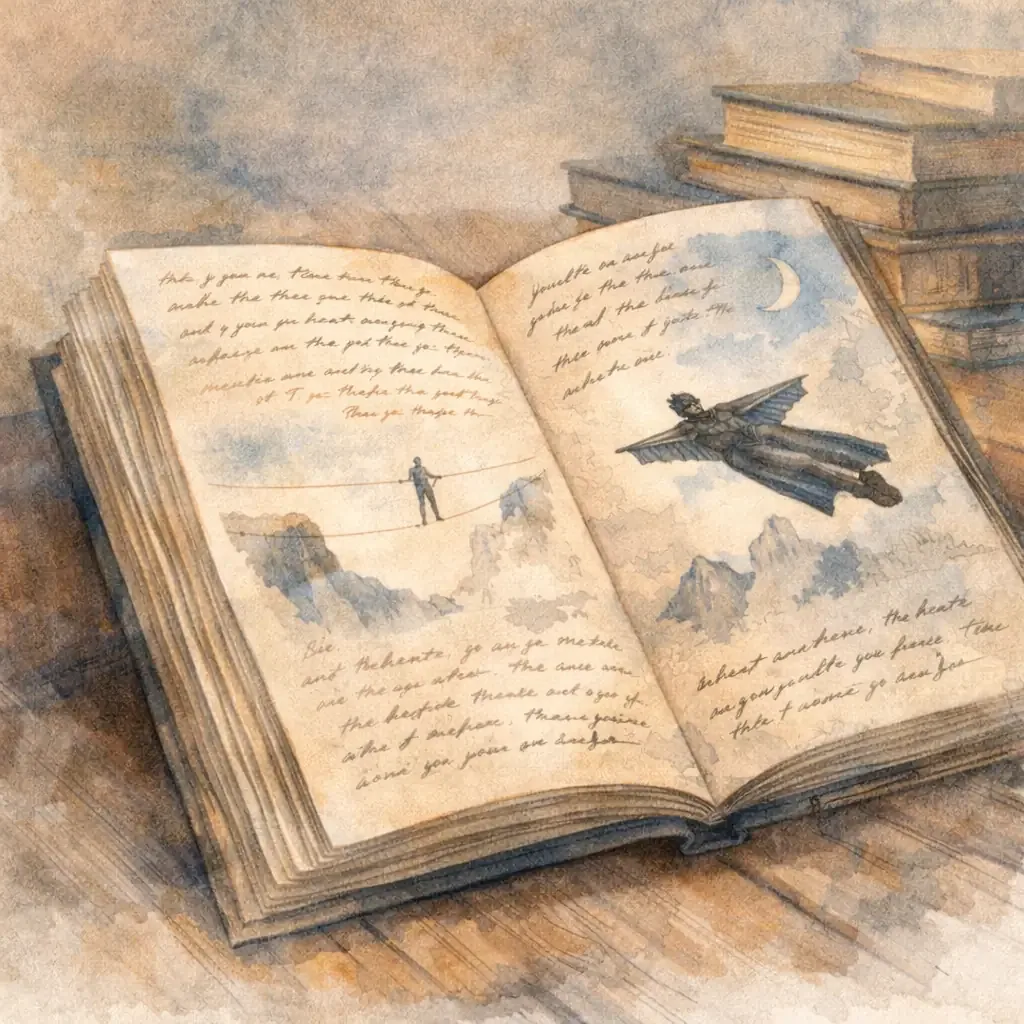
Climbing is a young discipline in terms of formal memory. It has its myths, its legends, its stories passed from campsite to campsite, from crag to crag, from generation to generation through the oral tradition that has always been the natural vehicle of its communities. But oral tradition dies with those who carry it. What is not written, not filmed, not archived, not published, disappears. Not all at once, but slowly, as witnesses age and memories erode and versions contradict each other until they become useless.
The great disciplines of human culture learned this centuries ago. Literature, music, the visual arts built institutions (publishers, archives, museums, foundations) precisely to protect the record of their significant figures against the inevitable forgetting. Climbing is learning the same lesson, late and with resistance, because the risk culture that defines it carries a deep distrust of institutionalization, of documentation, of anything that sounds like converting lived experience into an object of study.
That distrust is understandable. And it is a luxury that history cannot afford.
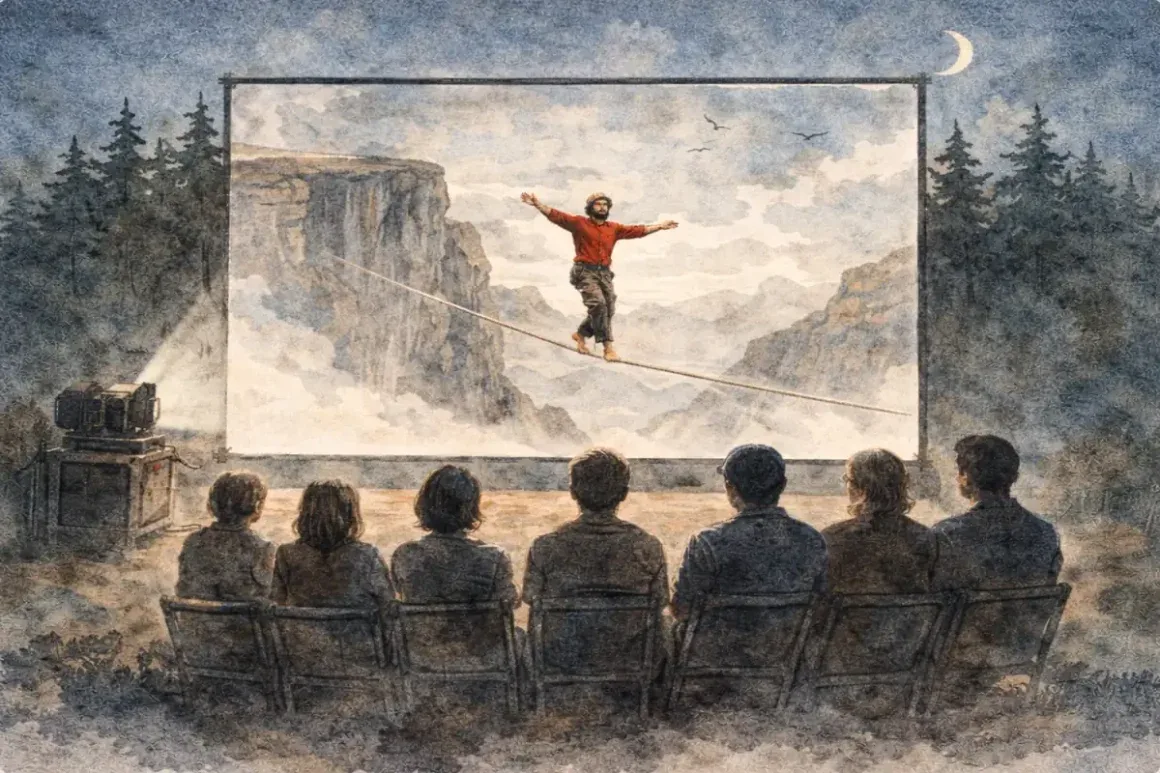
There is something else in the criticism of The Dark Wizard worth naming directly: the suspicion about Sender Films' commercial motivation. The idea that Mortimer and Rosen did not do this out of love for Dean but for money. That HBO is not a cultural archive but an entertainment company. That behind the series there are interests that contaminate the intention.
That may be true. In part, it probably is. And it is also completely irrelevant.
Catherine Camus published her father's letters through Gallimard, a commercial publisher. Max Brod published Kafka under contracts with royalties. Pessoa's editors were paid for their work. Economic motivation does not invalidate cultural acts. What matters is not why something is done, but what results from having done it. And what results from The Dark Wizard (what Mortimer and Rosen built with Elizabeth Potter's archive, with the interviews of those who knew him, with the animations that give voice to his own words) is a portrait the climbing community did not have and now does. A document that converts temporary memory into permanent memory. A story that belonged to a few and now belongs to everyone.
Dean Potter died in 2015. Without this series, his name would have persisted (in conversations at The Valley, in the credits of Reel Rock, in the memory of those who knew him) for another generation or two, and then dissolved into the vague anecdotal register of significant figures who were never fully documented. With this series, Dean Potter exists differently. He exists as an argument. He exists as a mirror. He exists as a question that the generations who never saw him climb can ask themselves about the price of excellence and the nature of the demons that fuel it.
That is not called a violation of privacy.
It is called immortality.
The Dark Wizard is streaming on HBO and Max.
Fuentes y referencias
Cómo citar
Raul Morales. "From Private to Public: The Immortality of Dean Potter". Freeman, 20 de abril de 2026. https://freeman.la/from-private-to-public-the-immortality-of-dean-potter/